

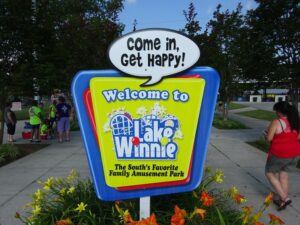

And while it’s also easier to spell this way, so many of us can spell it perfectly thanks to the radio and TV commercials of the early 90s with the singing jingle, “W-I-N-N-E-P-E-S-A-U-K-A-H, it’s so much fun that even if you can’t spell it, you’ll have so much fun! Come on, get happy!” Effective marketing? Yes, indeed.
The historic amusement park, located just south of Chattanooga in Rossville, Georgia, is now open for the 2026 season and beginning a new chapter in its long history under the operation of IB Parks & Entertainment, while the Dixon family retains ownership of the beloved park. The transition comes with a promise to preserve the traditions and family atmosphere that have made Lake Winnie a regional institution for more than a century.
For me, Lake Winnie isn’t just an amusement park. It’s part of my life’s timeline and story.
Like many people who grew up in the Sequatchie Valley and surrounding areas, I spent countless summer days there. There were church Vacation Bible School trips, school field trips, family outings, and eventually going on dates there as a teenager. Years later, I’ve had the opportunity to share many of those same experiences with my own children, who are now teenagers themselves. And remarkably, many of the rides I loved as a kid are still there.

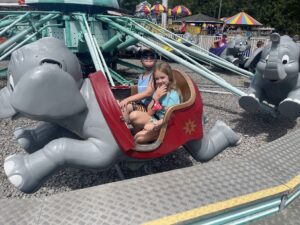
My children riding the same ‘Jumbo Elephants’ I rode as a child on our visit in July 2022
I can still remember taking the wheel of the Tin Lizzies antique cars, riding the classic train around the lake, braving the twists and turns of the Cannon Ball roller coaster, and splashing down the Boat Chute. The Matterhorn was always a favorite, as was the Alpine Way chairlift that offered a bird’s-eye view of the park.
There was also the original Wacky House, a wonderfully strange attraction that has since disappeared into history. Today, visitors can still enjoy the park’s famous Bill Tracy-designed dark ride, originally known as “The Castle” and now operating as the “Wacky Factory,” one of the park’s most unique and enduring attractions.
I spent plenty of time driving bumper cars, riding the Jumbo Elephants as a small child, and enjoying attractions that no longer exist. Two of my favorites from childhood were the kiddie Dune Buggy ride and the hand-car railroad attraction, where riders laid across a small rail vehicle and propelled themselves down the tracks using their arms. While the ride itself is gone, careful observers can still spot remnants of those old tracks near the Boat Chute entrance and the pirate ship area—a small reminder of the park’s ever-evolving history.

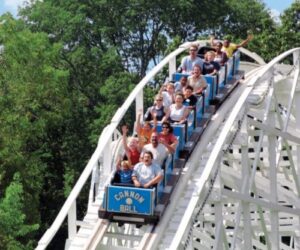
The Cannonball Roller Coaster — opened in May 1967
What makes Lake Winnie even more special to my family is that those memories stretch back far beyond my own childhood. My parents, both members of the Baby Boomer generation, grew up visiting the park long before I was born. Their stories include memories of attractions that today’s visitors never had the chance to experience, including the large swimming pool that once occupied the area where the Castle dark ride—today known as the Wacky Factory—now stands. For many families throughout the Chattanooga area and surrounding valleys, summer meant spending long afternoons swimming, riding rides, and gathering with friends at Lake Winnie.
The connection goes back even further. My grandparents, members of what is often called the Greatest Generation, also spent time at Lake Winnie in their teens and young adult years. Long before interstate highways, smartphones, streaming services, and modern theme parks, they found entertainment and recreation at the same lakeside area–albeit much simpler then–that continues welcoming visitors today. Few places can claim that kind of continuity. Four generations of my family have walked through their gates, ridden some of those same rides, and created memories on the same grounds.
That multi-generational connection is part of what makes Lake Winnie so unique. It isn’t just an amusement park; it’s a living piece of regional history. Grandparents can point out where attractions once stood, parents can share stories from their own childhood visits, and today’s children can experience many of the same rides that thrilled previous generations. In an era when so many family traditions have disappeared, Lake Winnie remains one of the rare places where nearly a century of memories still overlap.

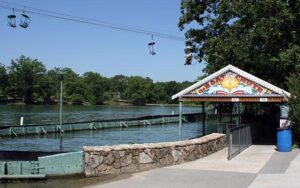
The Boat Chute — designed and built by founder Carl O. Dixon in 1927 still operates as the oldest operating mill chute ride in the USA. | Photo: Negative-G Website
Lake Winnie traces its roots back to 1925 when founders Carl and Minette Dixon opened the park as a lakeside recreation destination. The iconic Boat Chute followed shortly afterward, constructed during the winter of 1926-27 and still operating today as one of the oldest rides of its kind in America. The attraction remains one of the park’s signature experiences nearly a century later.
Over the years, the park has steadily grown. New thrill rides have been added, family attractions expanded, and in 2013 the park opened SOAKya Water Park, the largest expansion in its history. Yet despite those additions, Lake Winnie has somehow managed to retain the character that generations remember.
That’s increasingly rare.
Across the country, many small regional amusement parks have disappeared. Rising costs, changing entertainment habits, and corporate consolidation have caused countless family-owned parks to close their gates forever. And if those factors didn’t help, the COVID shutdowns and years that followed did many more in. Yet Lake Winnie remains.
That’s something we often take for granted.

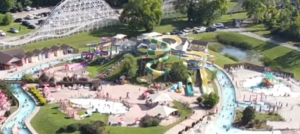
Lake Winnie and SOAKya Water Park as it exists today | Photo: WTVC
Within an easy drive of pretty much anywhere in our region sits a park that offers an experience comparable in many ways to attractions found at much larger destinations. Families can spend an entire day riding roller coasters, cooling off in the water park, enjoying classic midway games, and creating memories without traveling hundreds of miles.
And while, yes, the prices aren’t the same as those of my childhood in the 1980s and 1990s, they’re still very reasonable compared to many parks of similar size elsewhere–and even more so than larger parks around the southeast with larger rides, attractions, and often resorts and hotels attached to make the property more of weekend or week-long destination still smaller than parks like Disney or Universal.
The park’s new operating agreement with IB Parks & Entertainment appears focused on ensuring that future generations will have those same opportunities. Company officials have emphasized preserving Lake Winnie’s heritage, while members of the Dixon family have expressed confidence that the traditions that define the park will continue.
As someone whose family has been visiting Lake Winnie for at least four generations—from my grandparents and parents, to my own childhood, and now with my children—I’m grateful to see the park continuing into its next chapter.
Because places like Lake Winnie are more than amusement parks.

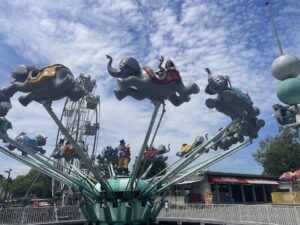
Jumbo Elephants in flight in 2022 | Photo: Logan Carmichael
They’re community landmarks, memory-makers, and living links between generations where friendships are formed, first dates happen, church groups gather, families reconnect, and generations share the same experiences decades apart.
We’re fortunate that one of the South’s most treasured amusement parks is still here, still thriving, and still creating summertime memories for families across the Tennessee Valley, one hundred years after it first opened its gates.
With another season now underway, a new generation of children will discover the Boat Chute, ride the train, soar through the air in the Jumbo Elephants, race through the bumper cars, and make memories of their own.