State agriculture officials are warning residents in Northeast Alabama after confirming the presence of an invasive tick species never before detected in the state.

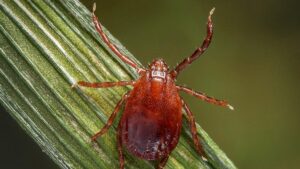
Asian Longhorned Tick
The Asian Longhorned Tick, a species known for rapidly reproducing and spreading disease, was recently identified by the Alabama Department of Agriculture and Industries. Officials say the tick poses potential health risks to both animals and humans and could become a growing concern across the region.
Dr. Tony Frazier, Alabama’s state veterinarian, said the invasive species has steadily expanded westward across the United States over the past several years.
“This particular pest has not been around very long. We’ve seen it move west over the last four to six years, and most all the eastern states now have had a detection,” Frazier said.
Native to Eastern Asia, the Asian Longhorned Tick was first discovered in the United States in 2017. Experts say one of the biggest concerns is the tick’s ability to reproduce without a male, allowing populations to grow rapidly in a short amount of time.
“This tick is prolific because the female can lay many eggs that become adults in a short time without a male,” Frazier explained. “It can carry organisms like Rocky Mountain spotted fever or a cattle protozoa called Theileria that can make a cow very sick, and for which there is no treatment.”
Officials say the ticks are extremely small and difficult to detect. A single female can lay as many as 2,000 eggs, leading to massive infestations on livestock, pets, and wildlife.
With warmer weather bringing more people outdoors, agriculture officials are encouraging residents to take precautions against tick exposure.
“Alabama is a great place to be a tick, and apparently our climate loves ticks,” Frazier said. “When going out into the environment, use a DEET product to spray on yourself. It’s especially important at dusk and dawn.”
Veterinarians say a variety of preventative treatments are available for pets, horses, and livestock, and the invasive tick appears to respond well to existing products.
“For companion animals like dogs and cats, there are several products that do a really good job, and this tick is susceptible to all of them,” Frazier said. “There are also good products for livestock and horses.”
Officials encourage farmers and pet owners who notice unusually large numbers of ticks on animals to contact their local veterinarian so the ticks can be properly identified and tracked.