
I wrote a similar lifestyle article about the history of schools in Marion County some years ago for another local publication. That publication has since changed hands, changed names, changed directions, and astonishingly failed to preserve much of its digital archive. The article is likely lost to time and the internet altogether. Not even a desperate search through the Wayback Machine could recover it — and unfortunately, I wasn’t much better at preserving my own writing back then either. I’m sure it still exists on some forgotten thumb drive tucked away in a drawer somewhere… but who knows where.
As another school year wraps up and the next one already seems to be racing toward us, I found myself reflecting again on the history of education in Marion County. Part of that reflection came while watching the old Jasper Elementary building — later home to the district’s alternative school and pupil services offices — enter its final days before demolition by the Town of Jasper.
Even though I never attended any of Jasper’s schools myself, the building still carries a deep sense of nostalgia for me. I spent 14 years working in technology for the Marion County school system with an office inside those walls before staff finally moved out in 2025. Day after day, I walked the same hallways once filled with generations of students, teachers, principals, and school memories stretching back decades. Seeing the building now sitting quiet and empty has brought an unexpected flood of reflection — especially as I prepare to head back to school myself this fall to begin a new chapter toward becoming a teacher.
Maybe that’s part of why the history of education here feels so fascinating in the first place. So much of it survives not in archives or databases, but in stories. In the few old brick buildings still standing. In fading class photographs tucked into family albums. In grandparents who can still tell you the name of every teacher they had in the eighth grade.
And if you know where to look, traces of that history are still everywhere.
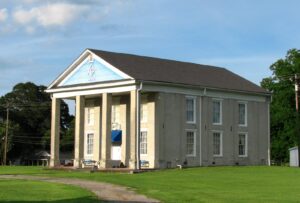
Sam Houston Academy stands near the courthouse in Jasper still to this day | Photo: Brian Stansberry/Wikimedia Commons
Take a walk around Jasper’s courthouse square and you can practically stand in the middle of Marion County’s educational timeline. Just north of the square on Academy Street sits one of the county’s oldest surviving educational landmarks — the old Sam Houston Academy building. Today, most people recognize it as the home of Masonic Lodge in Jasper, but long before lodge meetings and community gatherings filled its halls, the structure served as one of the region’s earliest centers of higher learning.
The academy’s roots stretch all the way back to 1826, though the stately Greek Revival building standing today was constructed around 1857, replacing an earlier structure on the site. Through the years, the building witnessed some of the most turbulent chapters in American history. It reportedly served as a gathering place for discussions surrounding secession before the Civil War and later functioned as a hospital for both Confederate and Federal soldiers during the war years.
There’s something poetic about its location today. The old academy quietly stands in the shadow of the present-day Marion County Board of Education offices — almost as if the county’s educational past is still keeping watch over its future.
Long before modern public school systems fully developed, institutions like Sam Houston Academy helped shape education across the Sequatchie Valley. Students studied Latin, rhetoric, arithmetic, geography, penmanship, and moral philosophy while many still balanced schoolwork with the demands of farm life and family labor. Education was considered both a privilege and a responsibility.
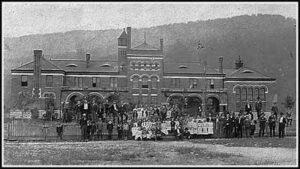
Pryor Institute in Jasper later became Marion County High School | Photo: Marion Co. High School History
Later came the Pryor Institute on College Street in Jasper, which would become one of the most influential educational institutions in the valley’s history. Established as a co-educational private institute, Pryor quickly gained prominence and eventually became the largest school in the entire Sequatchie Valley.
For generations, the school represented academic opportunity for families throughout Marion County and surrounding communities. Its impressive campus became a point of pride for the area, and in 1910 the institution formally transitioned into Marion County High School.
Unfortunately, one of Marion County’s grandest educational buildings no longer survives. After a newer Marion County High School facility was constructed on the institute’s front lawn during the late 1950s, the original Pryor Institute building was eventually demolished. Yet education never truly left the site.
The later Marion County High building eventually became Jasper Middle School after MCHS relocated to Ridley Drive years later. Jasper Middle remained there until moving into its new Highway 150 campus in October 2024. Today, the former school building continues serving the district as annex space and overflow offices for the central office complex — another chapter in the ever-evolving story of education in Marion County.
Jasper Elementary itself saw multiple generations of school buildings and reflected the broader consolidation of rural education across Marion County during the mid-20th century. Earlier students attended a two-story schoolhouse on Betsy Pack Drive before the later single-story building that, as of 2026, now faces demolition after years of serving not only as an elementary school, but later as the district’s alternative school and pupil services offices.
During the 1970s, Jasper Elementary also absorbed students from several smaller community schools as the county continued consolidating rural education into larger centralized campuses. Among those was Guild Elementary, located along U.S. Highway 41 in Haletown near Guild on the property adjacent to the former Succotash restaurant building. Like many small community schools across Marion County, Guild Elementary quietly disappeared as changing transportation, population shifts, and modernization reshaped the county school system.
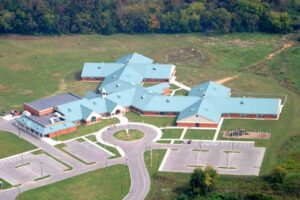
Present day Jasper Elementary campus on Warrior Dr. adjacent to MCHS | Photo: Wikimedia Commons
The present-day Jasper Elementary campus would not arrive until around the turn of the millennium, constructed during one of the largest modernization efforts in Marion County Schools history — an era that also brought the construction of the current Whitwell Elementary School and several other major facility upgrades across the district.
Long before modern consolidated campuses and sprawling parking lots, however, most Marion County children attended tiny community schools scattered throughout the mountains, coves, and river towns. Many were simple one-room structures heated by wood or coal stoves. Teachers managed multiple grades at once with limited supplies and few conveniences. School calendars often revolved around farming seasons because children were still needed at home to help work the land.
Yet education mattered deeply here.
Communities often built schools themselves. Families donated lumber, labor, land, and funding. In many rural areas, the schoolhouse doubled as a church, community center, or polling place. These schools became anchors of community life just as much as places of instruction.
South Pittsburg’s educational growth closely mirrored the rise of the town itself. As railroads, foundries, and manufacturing industries transformed the city into a booming industrial center, the need for organized public education grew rapidly alongside it.
Education in South Pittsburg dates back to 1898 with a wood-frame school building located on Cedar Avenue between 5th and 6th Streets near the site of today’s SVEC offices. That building was later replaced in 1924 by a larger brick school a few blocks south. The original frame structure eventually became apartments before being destroyed by fire in 1931.
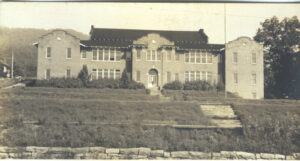
Early SPHS building | Photo: SPHS Website
The 1924 building served both elementary and high school students for many years until a separate grammar school opened in 1938. The high school portion remained in use until it too was razed and replaced by the current South Pittsburg High School facility during the mid-1960s.
South Pittsburg Elementary’s story took a different turn. The 1938 elementary building on Elm Avenue between 3rd and 4th Streets served generations of students before tragedy struck on February 25, 1993, when a devastating fire heavily damaged the school. Only a portion of the lunchroom survived.
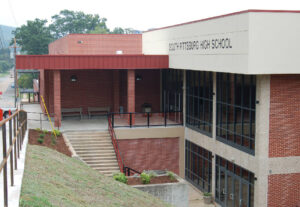
For a time, students attended classes anywhere space could be found — local churches, community centers, and even portions of the high school building. Construction on a replacement school began the following year, and the current South Pittsburg Elementary building opened midway through the 1994–1995 school year.
South Pittsburg High School itself became a tremendous source of civic pride. Athletics, band programs, and extracurricular activities helped unite the community, and generations of students walked the same hallways while the city transformed around them. In many ways, education in South Pittsburg became inseparable from the identity of the town itself.
Whitwell’s educational story developed differently, shaped largely by coal mining communities and mountain families spread across rugged terrain. Early schools were often tied to mining camps and isolated communities where transportation remained difficult and resources scarce.
Still, local families fought hard for educational opportunities.
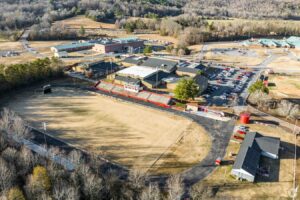
Whitwell Schools’ campus as seen today including WHS, WMS, and WES and Earl Condra Stadium | Photo: Wikimedia Commons
As Whitwell expanded during the coal boom years, its schools grew alongside it. The establishment of Whitwell High School around 1923 helped solidify a strong sense of community identity that remains deeply rooted there today. Like many Appalachian towns, the school became far more than a place of learning. Ballgames, graduations, reunions, fundraisers, and community events all revolved around the school system.
The original Whitwell High School stood on Main Street and later shared space alongside Whitwell Elementary. In the 1980s, the high school relocated to its current Tiger Trail campus, serving grades 7 through 12 at the time. Much of the original building was later demolished, though the old gymnasium survived.
By the mid-1990s, the Marion County School Board began reshaping the county’s educational structure. Whitwell Elementary was converted into Whitwell Middle School, while elementary students attended either Crossroads Elementary in Powells Crossroads or Griffith Creek Elementary atop Whitwell Mountain. Crossroads served grades K–3, Griffith Creek served K–6, and Whitwell Middle housed grades 4–8 while the high school transitioned to grades 9–12.
But the county soon entered one of its largest school construction and modernization periods.
The aging Jasper Elementary building on Betsy Pack Drive was replaced with a much larger modern facility behind Marion County High School. Meanwhile, Whitwell’s elementary school situation had become increasingly urgent. Crossroads Elementary faced overcrowding while Griffith Creek struggled with severe deterioration.
A new Whitwell Elementary School was eventually constructed near Whitwell High School, replacing both Crossroads and Griffith Creek when it opened. At the same time, fourth grade was moved back to the elementary campus as plans advanced for a brand-new middle school facility.
After decades serving as both Whitwell Elementary and later Whitwell Middle School, the aging Main Street building had simply outlived what repairs could reasonably accomplish. Yet before its replacement, Whitwell Middle had already earned international recognition through the famous Paper Clips Project, which began in 1998. The school later became home to the Children’s Holocaust Memorial, dedicated in 2001 ahead of the release of the acclaimed documentary Paper Clips in 2004.
The original building — constructed in phases between 1929 and 1949 and built similarly to the now-demolished Jasper Elementary structure — eventually gave way to the current $11 million Whitwell Middle School facility adjacent to Whitwell High School, which opened for the 2008–2009 school year.
Monteagle’s educational story followed its own unique path atop the mountain.
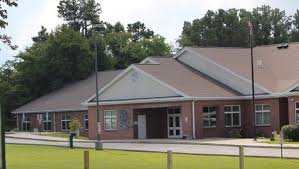
Present day Monteagle Elementary School | Photo: School website
Monteagle Elementary School traces its origins back to the 1890s and has served generations of mountain families for more than a century. Originally located in Grundy County on King Street, the school relocated across the railroad tracks to its current Marion County site on Second Street in 1938.
At the time, the new facility was considered remarkably modern, featuring indoor plumbing, central heating, and a dedicated lunchroom. Over the years, the campus continued evolving through major renovations and expansions, including substantial updates in 2004 and additional classroom and cafeteria expansion projects in 2007.
Today, Monteagle Elementary continues serving Pre-K through eighth grade students while maintaining the close-knit atmosphere that has long defined mountain communities.
Then there was Richard City and the unique Richard City Special School District — one of the most fascinating and often overlooked chapters in Marion County educational history.
Largely influenced by the Dixie Portland Cement Company, Richard City developed its own independent school district separate from the county system. Education became a major investment for the company-supported community, eventually leading to the establishment of Richard Hardy Memorial School.
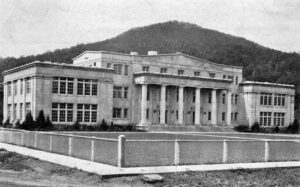
Richard Hardy School | Photo: school archives
Having just celebrated the school’s 100th year, Richard Hardy remains one of the county’s most enduring educational institutions and a source of immense pride for generations of students and alumni. Though smaller than many surrounding systems, the school built a reputation for strong academics, dedicated teachers, and exceptionally close-knit classrooms. For families in Richard City and nearby communities, Richard Hardy represented not only educational opportunity, but also identity and tradition.
Even today, alumni speak of Richard Hardy with extraordinary loyalty and affection. It remains one of those schools that feels less like an institution and more like an extended family.
And of course, no conversation about Marion County educational history would be complete without acknowledging McReynolds High School–the county’s segregated African-American school.
During segregation, Black students in Marion County attended separate schools that often operated with fewer resources and aging facilities. Yet schools like McReynolds became powerful centers of pride, discipline, culture, and achievement within the African-American community.
The roots of McReynolds High School trace back to 1917, when a committee of Black community leaders — including Brown McReynolds — petitioned the Marion County Board of Education for the establishment of a dedicated high school for African-American students in the county. Classes initially began in rented space in South Pittsburg in 1918, but the first building was lost to fire just a year later.
Community determination, however, never faded.
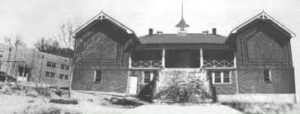
McReynolds High School | Photo: South Pittsburg Historic Preservation Society
By 1921, a new 22-room McReynolds High School had been completed in South Pittsburg with support from Marion County, local citizens, and partial funding through the Rosenwald Foundation — a nationally significant program that helped construct schools for African-American students throughout the segregated South. The school was named in honor of Brown McReynolds, who local leaders believed had done more than anyone else to help establish higher educational opportunities for Black students in Marion County.
McReynolds quickly became far more than simply a county school. For decades, it served African-American students from throughout Marion County as well as portions of nearby northern Alabama, including Bridgeport. At a time when educational opportunities for Black students across the South were severely limited, McReynolds stood as a beacon of opportunity and advancement.
Much of the school’s legacy is tied to longtime principal Professor Merzeller M. Burnett, who led McReynolds for approximately 25 years. Former students often recalled Burnett as a strict but deeply respected educator who demanded excellence, discipline, and dignity from his students regardless of the inequities surrounding them. Under his leadership, McReynolds developed strong academics, athletics, music programs, and a close-knit school culture that alumni still speak about with tremendous pride today.
Like many historically Black schools across the South, McReynolds became the center of community life. School plays, basketball games, graduations, church events, and civic gatherings all revolved around the campus. For many families, the school represented hope, progress, and opportunity during an era defined by segregation and discrimination.
Tragedy struck in July 1965 when the main school building was destroyed by fire. Yet even then, the community persevered. Former students recalled how the school’s gymnasium — constructed in 1949 — was temporarily partitioned into makeshift classrooms so students could continue attending school for one final year. The Class of 1966 ultimately became the final graduating class of McReynolds High School before Marion County schools were integrated.
For many years afterward, the old gymnasium remained standing at the foot of the mountain near South Pittsburg’s historic cemetery as one of the last physical reminders of the school’s existence. Though fires in recent years eventually claimed the remaining structure as well, the legacy of McReynolds High School remains deeply woven into Marion County history.
McReynolds was more than a school building. It was a cornerstone of community identity, perseverance, and achievement — and its story remains one of the most important chapters in Marion County’s educational history.
Beyond the larger schools, Marion County was once filled with dozens of rural community schools whose names now survive mostly through fading records, family memories, and the tireless preservation work of local historians.
Much of what we know today and most of the information I’ve used to write about these long-forgotten schools comes thanks to the extraordinary research efforts of the late local historian Nonie Webb and her invaluable Marion County history books and collections. Webb spent decades documenting the people, places, schools, mines, churches, maps, and communities that shaped Marion County long before much of it disappeared from living memory. Her works — including Old Schools, Teachers & Students of Marion County, Tennessee and Marion County, Tennessee: History & Keepsake Memories — have become treasured resources for local historians and genealogists alike.
And honestly, if you are lucky enough to own any of Nonie Webb’s books today, you already know how valuable they are. Around Marion County, they’ve become the kind of books families hold onto for generations. If you ever stumble across one at a yard sale, flea market, antique store, or tucked away on some dusty shelf somewhere — grab it and keep it for life!
Through Webb’s research and old county records, we know Marion County once included schools with names that sound almost frozen in time: Aetna Mountain School, Battle Creek Elementary, Browder Switch School, Bryant’s Cove School, Butcher Creek School, Coppinger’s Cove School, Doran’s Cove School, Foster Falls School, Francis Springs School, Hale’s Bar School (in addition to Guild School), Hick’s Chapel School, Jasper Cove School, Kimball School, Liberty School, Needmore School, Oak Grove School, Pocket School, Pryor Ridge School, Rankin’s Cove School, Shellmound School, Stanley School, Sulpher Springs School, Sweeden’s Cove School, Victoria Cove School, Whiteside Mountain School, and dozens more scattered throughout the valleys, mountains, coves, and mining communities of the county.
Some were little more than weathered wooden buildings beside dirt roads. Others sat next to churches, cemeteries, or community gathering places. Many served isolated mountain and mining communities where traveling to larger towns simply wasn’t practical. Some schools educated only a handful of students at a time, while others became important social centers for entire communities.
Most disappeared quietly as consolidation reshaped Tennessee education during the mid-20th century and even earlier.
But many of our older residents still remember them or have heard tales of them from their elders.
The tales of carrying metal lunch pails down gravel roads before daylight, potbelly stoves warming classrooms on freezing winter mornings, not to mention countless school activities, spelling bees, pie suppers, Christmas programs, May Day celebrations, and sports events.
And in many ways, those little community schools helped build Marion County just as much as the larger campuses that eventually replaced them.
Today, modern campuses serve students across Jasper, Whitwell, South Pittsburg, and Monteagle. Technology, transportation, and educational standards have changed dramatically from the days of one-room schoolhouses and coal stoves.
But in many ways, the heart of Marion County education remains exactly the same.
Schools are still where communities gather on Friday nights in the fall. They’re still where lifelong friendships begin. They’re still where teachers quietly change lives in ways that often won’t be fully understood until years later.
And scattered across Marion County — from Academy Street in Jasper to old rural roads tucked beneath the mountains and deep in hollers — the echoes of those earlier schools still linger for anyone willing to slow down long enough to notice them.