
American consumers are once again feeling the pressure of rising prices, and the impact is increasingly noticeable across Tennessee — including in Marion and Sequatchie counties — as inflation surged nationwide amid escalating energy costs tied to the ongoing conflict involving Iran.
New federal data released Tuesday showed the U.S. Consumer Price Index climbed 3.8 percent over the past year, marking the highest inflation rate seen since 2023. Economists point largely to rapidly increasing gasoline and energy costs after oil markets reacted to disruptions in the Middle East and continued instability surrounding the Strait of Hormuz, one of the world’s most important oil shipping routes.
Gasoline prices nationally jumped more than five percent in April alone and are now up nearly 30 percent compared to a year ago, according to multiple reports analyzing the latest inflation figures.
Tennessee drivers are seeing those increases firsthand.
According to AAA, Tennessee’s average gas price recently surpassed four dollars per gallon for the first time since 2022, with the statewide average hovering around $4.03 per gallon earlier this month. Chattanooga-area prices were averaging roughly $4.11 per gallon this week.
For rural counties such as Marion County and Sequatchie County, rising fuel prices can hit particularly hard because many residents commute longer distances for work, healthcare, and shopping. Data from the U.S. Census Bureau and Data USA shows Marion County residents average nearly 34 minutes commuting to work — considerably higher than the national average.
Economic data also highlights why inflation pressures may be especially difficult locally. Marion County’s median household income is estimated around $61,824, while approximately 13.8 to 16 percent of residents live below the poverty line depending on the reporting source.
Sequatchie County historically posts similar or slightly lower income levels than statewide averages, meaning increases in fuel, groceries, utilities, and transportation costs can consume a larger share of household budgets compared to more affluent urban areas.
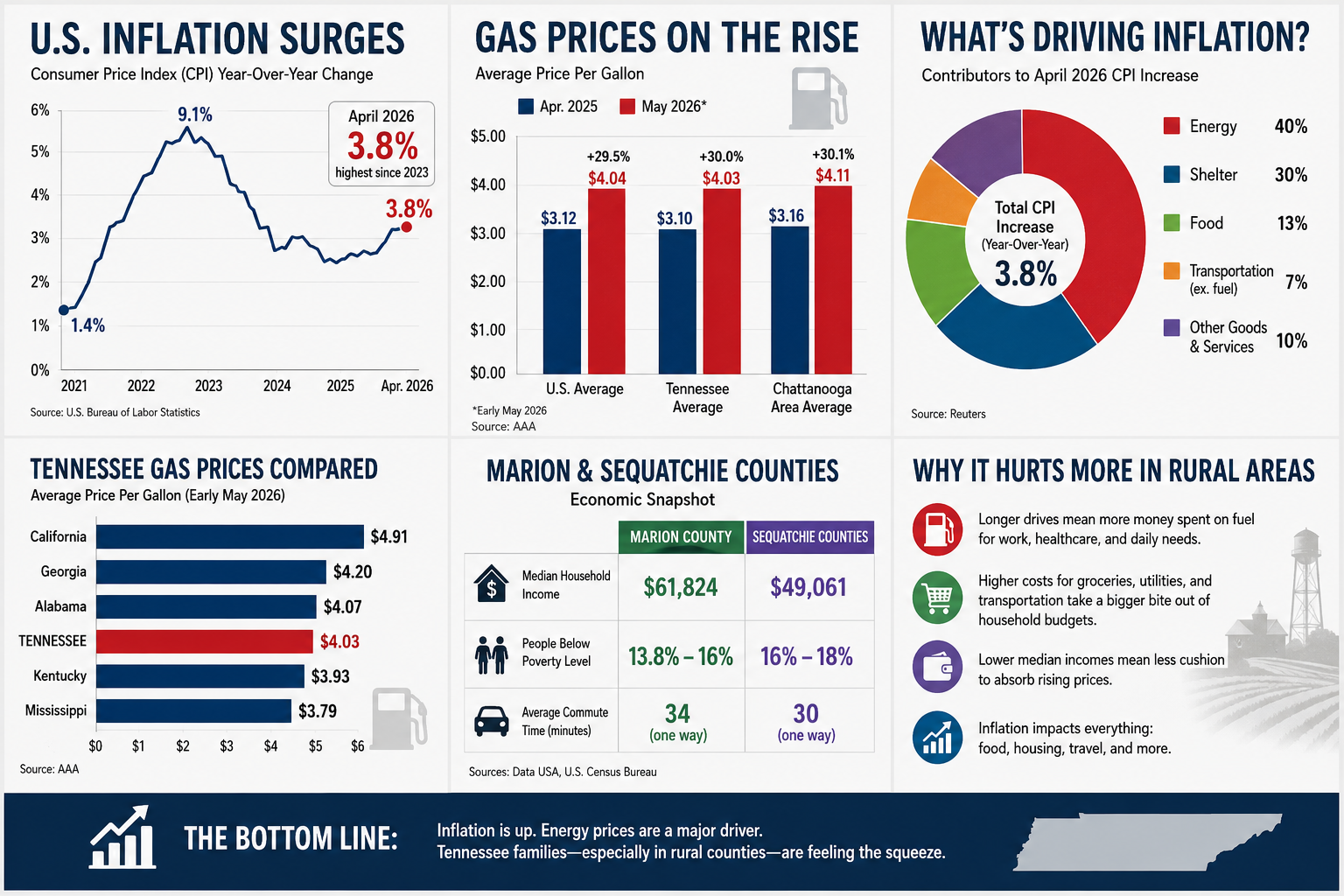
Statewide, Tennessee continues to maintain lower overall fuel costs than many neighboring states, but inflation is still affecting consumers across the Volunteer State. Food prices, airline fares, housing, and utility costs also climbed in the latest national report.
Economists say energy remains the key driver behind the current inflation spike. Reuters reported energy prices accounted for more than 40 percent of April’s monthly inflation increase nationwide.
While federal officials hope inflation pressures may eventually ease if oil markets stabilize, analysts warn continued geopolitical instability could keep prices elevated through the summer travel season. Federal Reserve officials are also expected to hold interest rates steady for now amid concerns that inflation could remain stubbornly high.